
Jim Hogg County Bench Warrants Explained
A bench warrant is a court order connected to a pending case or an unfulfilled court obligation. A missed hearing or failure to appear can lead to an order for arrest, but the public Jim Hogg County sources do not publish a county-specific list of triggers, warning letters, grace periods, or warrant numbers. Do not assume every unpaid balance automatically produces the same kind of order.
Find the case first. A justice-court citation belongs with its precinct; felony criminal matters are handled through the 229th Judicial District Court and the combined County and District Clerk. The issuing judge controls whether process remains in effect.
Jim Hogg County Warrant Court Levels
Jim Hogg County's court map has four JP precincts, a County Constitutional Court, and the 229th Judicial District Court. Research identified no incorporated municipality or local municipal court. A citation issued in the county therefore should be traced to the court printed on its notice rather than assumed to be a city-court warrant.
The sheriff handles service and jail matters, while the issuing court controls a bench-warrant case. The County Constitutional Court page and 229th District Court page identify the county-level and district channels.
Use the court name and cause number to get directed to the right clerk.
Jim Hogg County JP Warrant Contacts
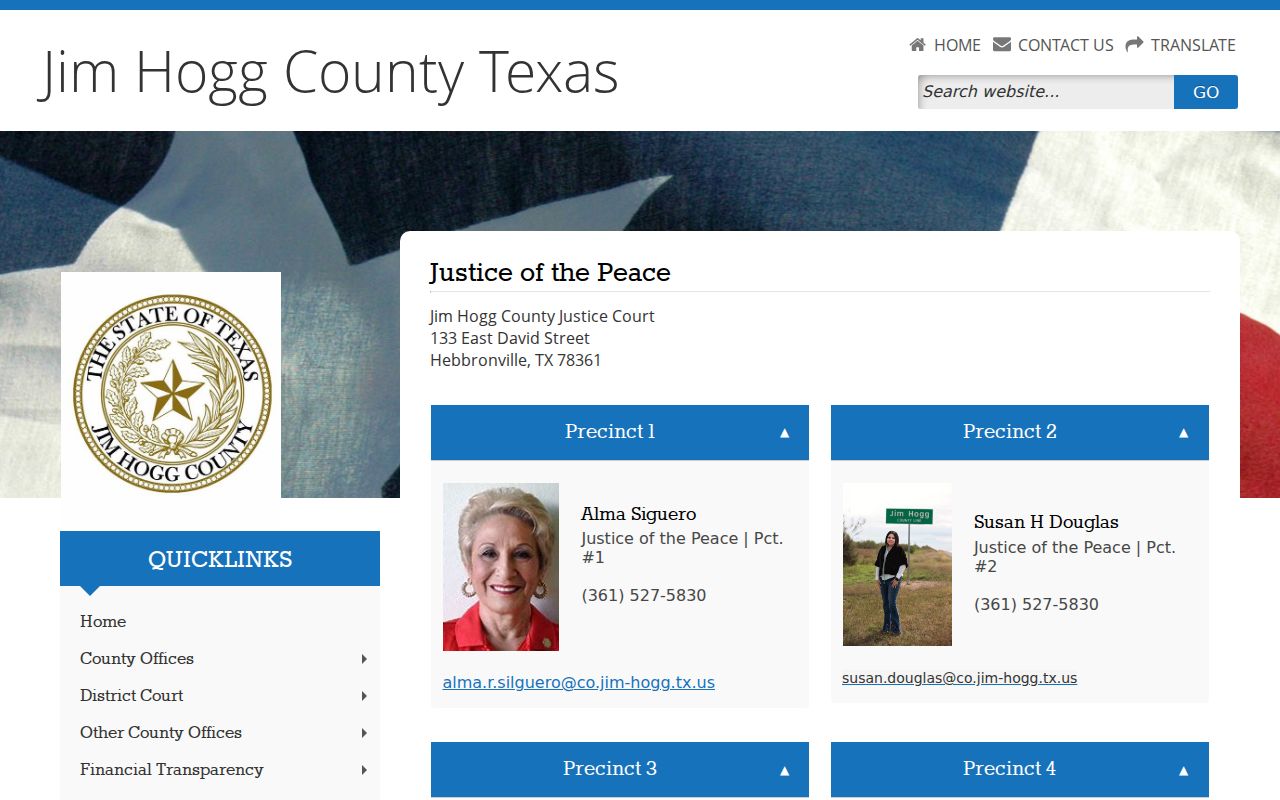
All four Justice of the Peace precincts share a published contact point at 133 E. David, Hebbronville, and phone 361-527-5830. The county page identifies the precinct courts but does not provide a single online warrant-status tool. Ask which precinct owns the citation before discussing an appearance or balance.
The Justice Court page is the county's routing source. It also lists the precincts, so a person can confirm which court to call rather than treating all county cases as one docket.
For a district case, use the separate district clerk and criminal coordinator route.
How Jim Hogg County Bench Warrants Are Issued
A judge may issue a warrant after a person fails to meet a court obligation, but the local materials do not describe a standardized county notice-and-issuance sequence. A record may remain with the court that set the case, and public case access does not establish whether a separate warrant has issued or been recalled.
Ask the clerk or JP to verify the case docket and the court's process record. If a case was paid, reset, or otherwise resolved, ask whether the court has entered the action that clears the order and whether any agency update is pending.
Jim Hogg County Chapter 45A Notices
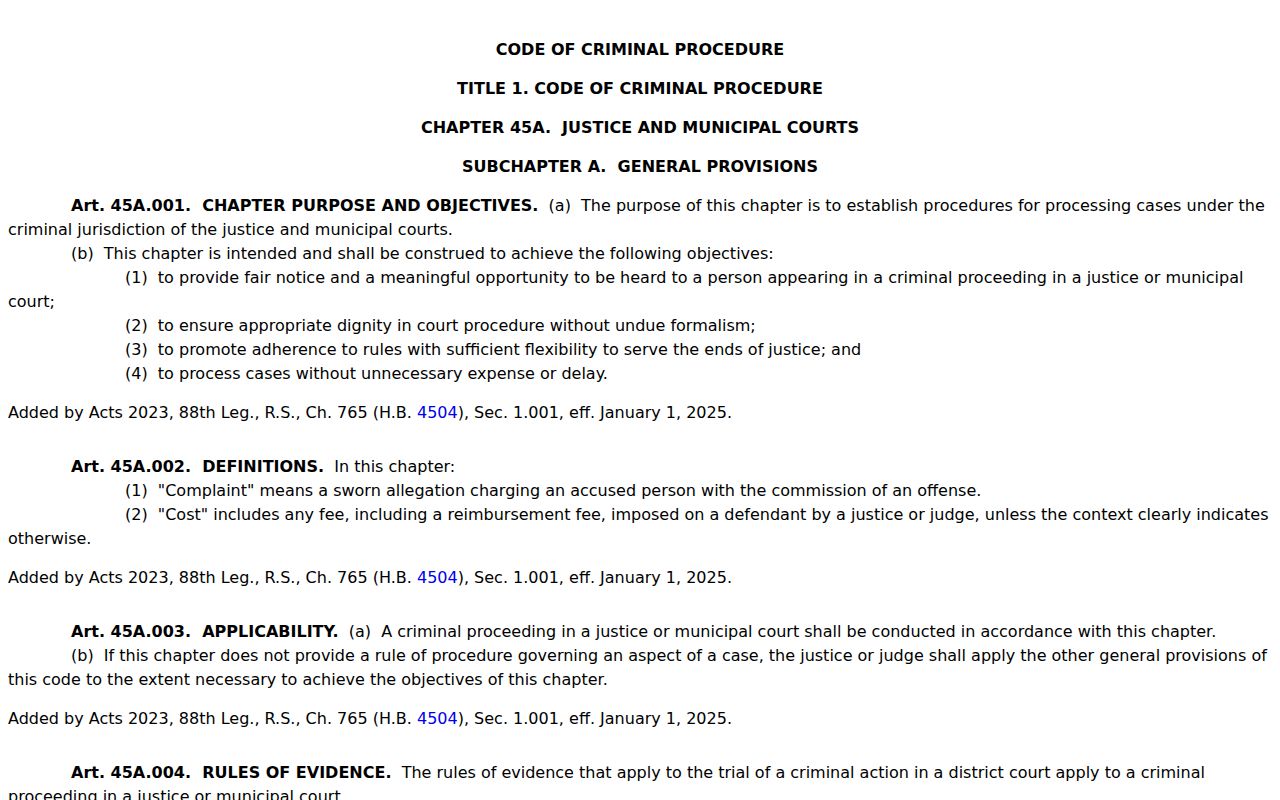
Texas Code of Criminal Procedure Chapter 45A includes procedures for a court to send notice after a failure to appear and provides a way to request voluntary appearance for certain initial warrants. Applicability depends on the offense and procedural posture. The statute is a state framework, not evidence that Jim Hogg County has a local automatic recall form or fixed grace period.
Contact the court on the citation or cause number and ask whether a notice was sent, whether voluntary appearance is available, and what filing or hearing is required. Do not rely on an online payment receipt as proof that a warrant was recalled.
Texas Chapter 45A procedures provide the legal context; the local court must confirm how the case is recorded.
Use the issuing court's instructions for a particular case.
Bench Warrants and Arrest Warrants Compared
A bench warrant follows a court obligation such as a missed appearance. An arrest warrant is based on a judicial finding of probable cause tied to an alleged offense. Both authorize custody, but the case history and court remedy differ. See arrest warrant procedures for the separate process.
| Feature | Bench Warrant | Arrest Warrant |
|---|---|---|
| Trigger | Missed appearance or court obligation | Probable cause of an alleged offense |
| Who Issues It | Judge in the existing case | Judge or magistrate after review |
| Underlying Case | Pending case or judgment | Investigation or criminal charge |
| How It Clears | Ask issuing court about appearance, recall, or quash | Confirm status and address custody or bond with counsel |
Jim Hogg County Capias Warrant Procedure
A capias pro fine is a court process used after judgment when a fine or costs remain unpaid. Texas law describes hardship review and alternative compliance options in appropriate cases. That post-judgment tool is distinct from a warrant associated with a missed court date, and the county does not publish a local capias-pro-fine list or blanket payment schedule.
Ask the issuing court for the judgment balance and available options before sending payment. A court can explain whether a hearing, payment plan, community service, or other statutory path applies to the record.
Texas Chapter 43 supplies the statewide framework; it does not state that any specific option has been approved in a particular Jim Hogg County case.
Request case-specific instructions from the court clerk.
Resolving a Jim Hogg County Bench Warrant
There is no published county surrender form, warrant-recall form, bond schedule, or walk-in bench-warrant docket. The first step is to identify the court and confirm the current status. After that, the court can explain whether the case needs an appearance, motion, fine payment, or a hearing before it will withdraw its process.
- Use the citation or cause number to identify the issuing court.
- Ask the court what procedure applies and whether counsel should file a motion to recall or quash.
- Confirm any hearing or appearance date directly with the clerk.
- After compliance, request confirmation that the court entered the resolution and transmitted any needed update.
Caution: Do not assume a warrant disappears with time or payment; confirm the court's record and discuss an appearance with an attorney.
Jim Hogg County Warrant Case Assignments
The combined County and District Clerk separates criminal assignments: Rae Gutierrez handles district criminal and civil matters, while Kathy Morales handles county cases. Monica Guerrero is listed for child-support and CPS matters. A clerk assignment can help route a question, but it does not replace confirmation by the issuing judge or court.
The County Clerk page gives the office's current public contact information. District criminal questions can also be routed through the District Court criminal coordinator. State the court and cause number when asking which desk maintains the case.
Ask who has the file before discussing a resolution request.
Jim Hogg County Warrant Access Exceptions
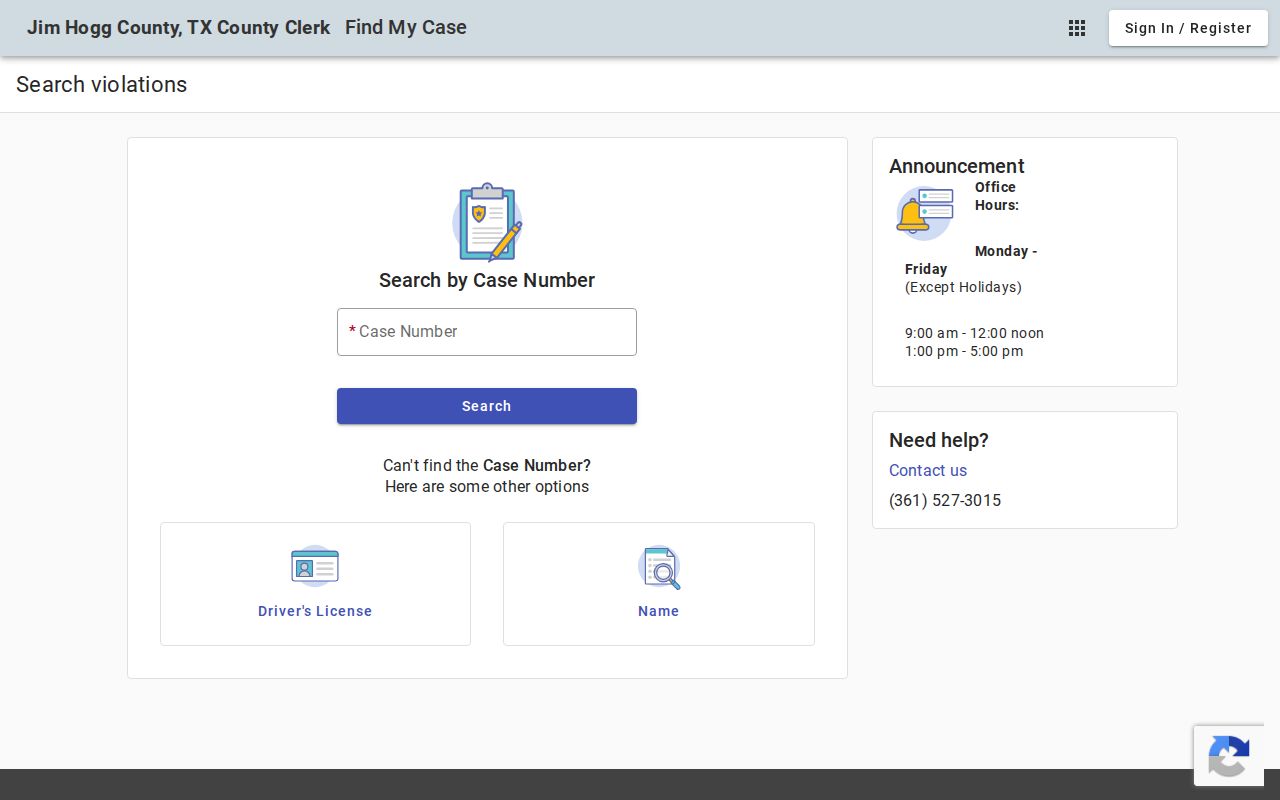
Texas Public Information Act access is subject to statutory exceptions, including some law-enforcement material. A court case appearing in public search does not mean every supporting document is immediately open or that protected information should be republished. Ask the record-holding office whether an item is available and how to request it.
The law-enforcement exception is a records-access rule, not a county warrant-status label. The Sheriff's Department and court remain separate sources, and an online case index is not a public warrant roster.
The Texas Public Information Act describes the state disclosure framework.
Request any court or agency record through the office that maintains it.
Finding the Court That Issued the Warrant
A bench warrant stays under the authority of the court that issued it. Jim Hogg County has four JP precincts, a County Constitutional Court, and the 229th Judicial District Court. The research found no incorporated municipality or municipal court, so a citation inside Hebbronville is not automatically a city-court matter.
For JP matters, the four precincts use the Justice Court's shared contact. For district criminal records, the court is at 102 E. Tilley, second floor, and the combined Clerk is at the same street address. Start with a warrant lookup route, then verify with the office that owns the docket.